How to Record Your Great-Grandparent's Life Story (2026)
A step-by-step guide to recording your great-grandparent's life story in 2026, so their voice, memories, and legacy outlast them for generations.
TL;DR
Your great-grandparent carries stories nobody else can tell. Here's how to record them in a way that works for both of you, from picking the right afternoon to turning the conversation into something your whole family keeps forever. Gift a Life Story at giftpodcast.com.
The Oldest Voice in Your Family
If you still have a great-grandparent, you have something most people never get. A living bridge to a time nobody else in the room remembers. The way bread smelled in the 1940s. What a wedding cost when they got married. The sister who died young and nobody talks about anymore. The jokes that worked in a language half the family doesn't speak.
Right now, those stories live in one person. When that person stops talking, so do the stories. Not in a decade. In weeks, sometimes. Memories thin before voices do, and voices thin before heartbeats.
You don't have to do anything dramatic about that. You just have to sit with them, press record, and ask.
Why This Year, Not Next
Every family who records a great-grandparent says the same thing afterward: I'm so glad we did it when we did. Every family that doesn't says I keep meaning to. The gap between those two sentences is usually one unplanned Sunday.
The honest math: if your great-grandparent is in their 90s, you probably don't have five more Christmases. You might not have two. You will certainly have fewer good afternoons where they feel like talking than you think. This is not meant to scare you. It's meant to answer the question why not next year before you ask it.
Step 1: Pick the Right Afternoon
The best time to record a great-grandparent is a late weekday morning. They're rested, lunch isn't close enough to rush, nothing medical is scheduled. Avoid holidays: the house is loud and they're tired. Avoid right after a nap, when they're groggy.
Pick a chair they already sit in. A corner they already feel safe in. If they wear hearing aids, make sure the batteries are good. If they wear dentures, bring water. If they're in a facility, close the door and ask the nurse for a 45-minute hold on interruptions. Nothing kills a story like a med cart.
Tell them this is a conversation, not a performance. You are not making a documentary. You're asking because you want to know.
Step 2: Prepare Questions That Match Their Energy
Great-grandparents don't have the stamina for a 90-minute oral history. Plan for 20 to 30 minutes of real talking, with pauses they can lean into. The first ten minutes are warm-up.
Try opening with easy, warm questions:
- "What's your earliest memory?"
- "What's a smell that takes you back?"
- "Who was the funniest person in your family growing up?"
Then move into the stories you don't want lost:
- "What did your mother teach you that you still use?"
- "What was the hardest year of your life, and how did you get through it?"
- "What's something you wish our family knew about where we come from?"
- "What would you tell your 25-year-old self?"
- "What's the one story you want the great-grandchildren to hear from you?"
Resist the urge to interrupt. The pauses are where the real stories live. If they say "I don't know, nothing comes to mind," wait. Count to ten. Something will come. For a longer list, see 50 questions to ask your grandparents before it's too late.
Step 3: Record It, Three Ways That Work
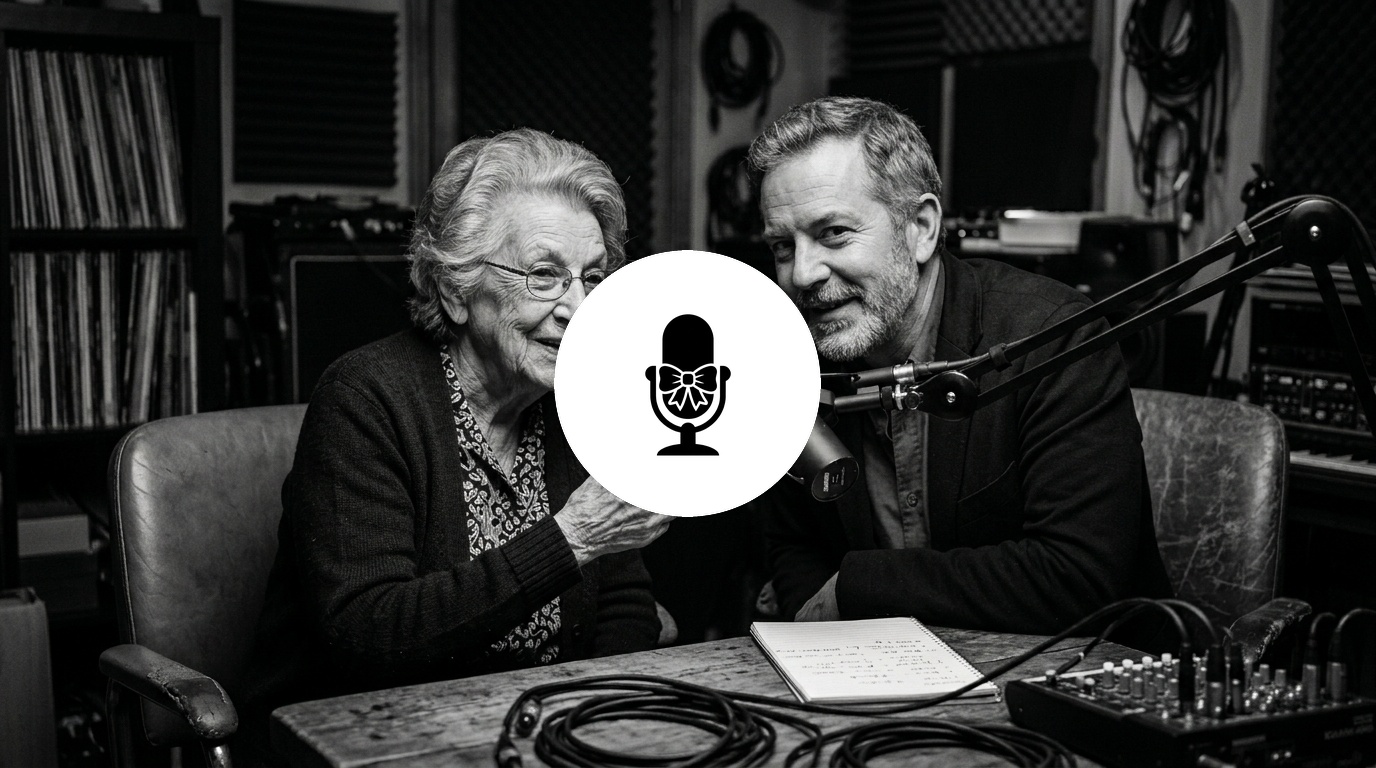
Option A: Phone voice memo. Put your phone on the arm of their chair, open Voice Memos, press record. It's free, it works, and the audio quality is usually fine for talking in a quiet room. The catch is that it's on you to lead the conversation, remember all the questions, and come back to the ones you forgot.
Option B: Video call recording. If your great-grandparent lives far away, record a video call. Zoom, FaceTime (newer iPhones only), or Google Meet all have recording options. Make sure they know they're being recorded, and that it's going to live somewhere permanent.
Option C: Let something else do the interviewing. This is what Gift Podcast is built for. You buy a Life Story Interview, send a link to your great-grandparent, and they click it and talk. Up to 30 minutes with a warm AI host that asks the kind of questions a great biographer would, in a natural, patient voice. No app. No account. No tech skills. The whole purchase takes about 60 seconds. The recording comes back professionally mastered as a downloadable podcast episode you keep forever. The gift link stays valid for a full year, so there's no pressure to catch them on a good day; they can take the interview whenever they feel ready. Gift a Life Story at giftpodcast.com.
The reason this exists is that most people never actually sit down and do Option A. They mean to. They don't. Having a service that asks the questions for you, warmly and in a voice that doesn't rush, is often the difference between a recording that happens and one that doesn't.
Step 4: Preserve It Properly
Once you have the recording, it is now the single most valuable file in your family, and most families lose it within three years. Phones get upgraded. Clouds get deactivated. Email attachments expire. Email accounts die when their owners do.
Three places, minimum:
- Your phone and your laptop
- Cloud storage you actually pay for (iCloud, Google One, Dropbox)
- A copy sent to one other family member who you trust to keep it
If you used Gift Podcast, download the MP3 the moment it's ready. The listen link is active for 30 days; once downloaded, the file is yours forever and can go anywhere audio goes.
Label the file with a date and a name. In 40 years, the person who inherits your files should know what they're looking at without opening it.
What If They Can Only Talk for Ten Minutes?
That's fine. Ten minutes of your 94-year-old great-grandfather talking about his father is more than most families have of anyone from that generation. If they tire, stop. You can always come back next week.
If they can only speak in short bursts, that's still worth it. Patch together three fifteen-minute sessions over a month. The AI host at Gift Podcast is particularly good at this: it waits, it doesn't rush, and it doesn't make them feel like they're wasting your time.
"They're Too Old For This"
They're not. The system is designed to feel like a phone call, because that's what works for people in their 90s and beyond. No scrolling. No login screen. No account to make. Click the link, hear the voice, start talking. The hard part is not the technology. The hard part is sitting with them for 30 minutes and asking.
If you want more ideas before you commit, see our great-grandparent gift ideas for other ways to honor the oldest person in your family.
The Closing Thing Nobody Says
Here is what every family who recorded a great-grandparent eventually says, usually at a funeral: I'm so glad we have her voice.
Here is what the families who didn't say: nothing. There is nothing to say. The voice is gone.
You can't record someone after they're gone. You can't go back and ask the question you forgot. You can only ask it now, on an ordinary afternoon, in an ordinary chair, with a phone or a link and 30 minutes.
Don't wait for the right moment. The right moment is the next time you see them.
Sources
Give them the ultimate gift
Capture their incredible legacy forever. Produce an exclusive AI-powered podcast.
Start Recording Now